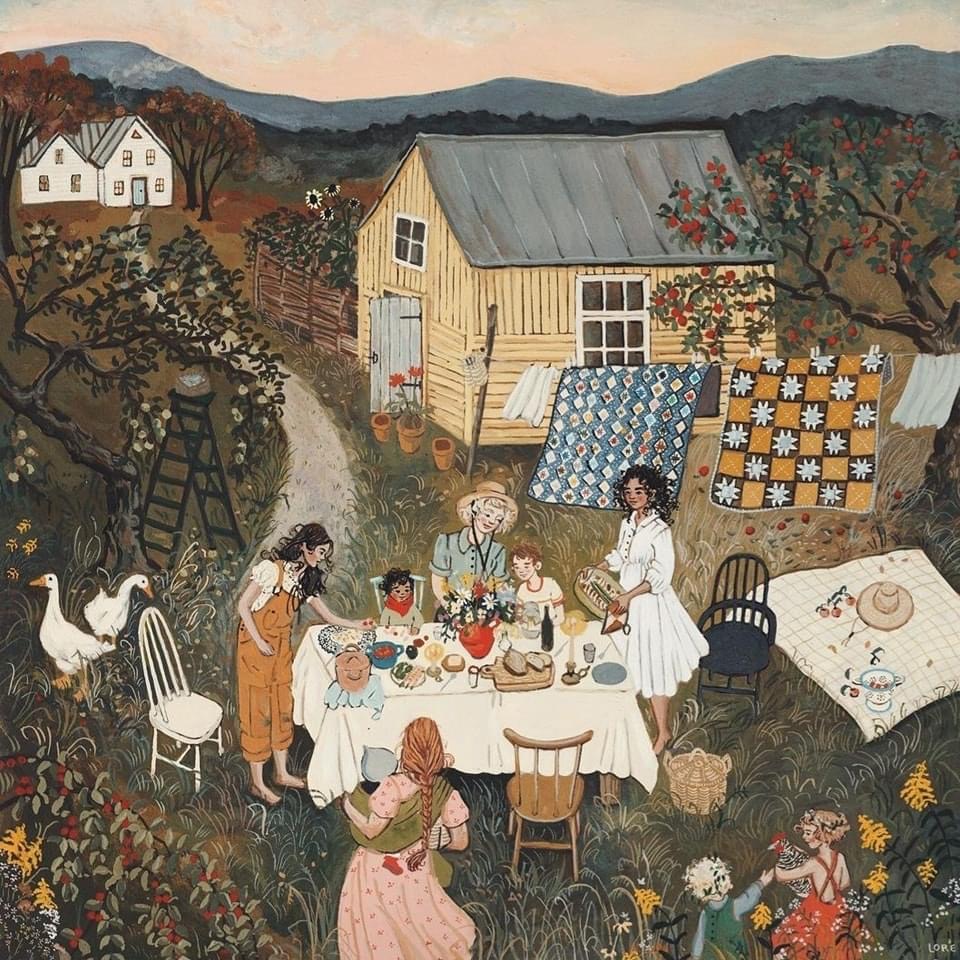
Some of my sweetest childhood memories were in the countryside during the hottest parts of summer, when my parents and grandparents would take me back to the country house where nearly every household had its own kitchen garden. Not the decorative gardens people scroll past online today, but living gardens—messy, overflowing, buzzing with life, carrying the smell of soil, water, leaves, smoke, and food at every hour of the day.
The moment we arrived, the air itself felt different. The city smelled metallic and dusty, but the countryside smelled alive. Warm earth after irrigation. Sweet fruit ripening under the sun. Tomato vines baking in the heat. Wet stone near the riverbanks. Chickens scratching the soil. Fresh-cut scallions. Garlic drying under the roof. The faint smokiness from wood-fired cooking drifting through the entire neighborhood in the evenings.
The summer heat was scorching. The concrete roads shimmered under the sun and cicadas screamed so loudly in the trees that sometimes it felt like the entire sky was vibrating. But then we would run barefoot into the river. The water was shockingly cold against sunburned skin. Smooth river stones slipped beneath our feet while tiny fish darted around our ankles. Wild ducks nested along the reeds and sometimes left eggs hidden near the banks. We would carefully search for them in the tall grass, laughing quietly as though we were discovering treasure. I still remember holding those warm duck eggs in both hands. The shells were slightly damp from the river mist and smelled faintly earthy, almost grassy. My grandmother would bring them home in a woven basket while the yellow village dog followed us slowly under the blazing sun.
The family kitchen garden was more like a small food forest. Tall jujube trees shaded almost the entire backyard. Their branches twisted wide over the rooflines and cooled the earth underneath so well that stepping beneath them felt like walking into another season. The jujubes themselves were the sweetest fruit I had ever tasted. When freshly picked, they were crisp like apples but carried a deep honey sweetness that somehow tasted both refreshing and comforting at the same time. My grandmother used them in everything. She simmered dried jujubes into herbal soups and teas believed to support digestion, circulation, sleep, and energy recovery during the hottest months of summer. Sometimes she stuffed sticky rice inside the softened fruits for celebrations. Sometimes she cooked them slowly with ginger into sweet broths that filled the entire kitchen with warmth. When we were tired or overheated, she would boil jujubes with Goji berries into a fragrant tea that smelled sweet, woody, and calming. The trees dropped tiny patches of dancing shade across the yard while vines climbed everywhere above us.
Luffa and cucumbers hung heavily from bamboo trellises overhead, swinging gently in the hot wind. Eggplants grew glossy and dark purple beneath broad leaves. Peppers glowed green, red, and orange against the sunlight. Everything grew with unbelievable abundance. Every few weeks the bamboo trellises had to be reinforced because the vegetables became too heavy. Even though we harvested and cooked every single day, there were always more.
The chickens wandered freely through the garden with the yellow dog. They chased insects, scratched around compost piles, and ate kitchen scraps tossed from the outdoor sink area. Their feathers glowed gold under the evening sun while they clucked softly around our feet.
There were so many eggs. My grandmother turned them into endless dishes. In the mornings, I would wake up to the sound of oil crackling in a wok before the sun fully rose. The windows would fog lightly from the steam while the smell of eggs and scallions drifted through the house. Sometimes she made tomato egg stir fry—the tomatoes collapsing into a sweet, savory sauce that coated the soft scrambled eggs perfectly. Sometimes steamed egg custard so smooth it trembled like silk when touched with chopsticks. Sometimes fried eggs with chili peppers blistered black around the edges. Sometimes egg drop soup with scallions floating gently in golden broth. And sometimes she simply boiled fresh eggs and placed them beside cold cucumbers smashed with garlic and vinegar after long afternoons in the heat. Those meals tasted like safety.
The garden itself operated like a living system where nothing was wasted. Water always had another purpose. Rice-rinsing water was saved in buckets and poured around vegetables because the starches and nutrients helped feed the soil and support plant growth. Banana peels soaked in water became homemade potassium-rich fertilizer for flowering and fruiting plants. Compost tea dark as coffee was brewed from decomposed organic matter and diluted carefully before feeding the garden beds. Chicken manure composted slowly into rich black soil that smelled sweet and earthy instead of foul. Kitchen scraps disappeared back into the soil through buried composting systems, worm towers, and hand-built piles tucked behind the trees. Even the outdoor wash station had a rhythm. Water used to rinse vegetables cooled the surrounding ground before flowing toward thirsty plants. Nothing felt disposable. Everything cycled back into life.
At dusk, the heat finally softened. Mist from watering hoses drifted through the garden and caught the orange light of sunset. Frogs began singing near the riverbanks. The leaves moved slowly in the evening breeze while the sky turned lavender, peach, and deep blue all at once. I remember lying under the jujube trees after dinner listening to adults talk softly while crickets filled the darkness. The scent of warm soil, tomato vines, herbs, river water, and cooked eggs lingered in the air long after the sun disappeared.
Those memories never left me. And now, as an adult, I realize those gardens were doing something much deeper than producing food. They were producing Health, Movement, Routine, Connection, Shade, Resilience, Purpose, Fresh air, Conversation, Intergenerational memory. They taught people to participate in life instead of only consuming it.
That is exactly the joy and memory I want my children—and their children—to have. To know the feeling of warm tomatoes picked directly from the vine. To hear chickens rustling softly in the garden at sunrise. To feel cold river water against bare feet after standing under a scorching summer sky. To smell soil after watering in the evening. To taste cucumbers still warm from the sun. To sit beneath fruit trees while grandparents cook nearby. And maybe, even if someone never had those memories growing up, I still want them to have the chance to grow old surrounded by them. Because somewhere deep inside us, I think human beings still remember what it feels like to live close to growing things. Earth Mart was born from wanting to bring that feeling back.